
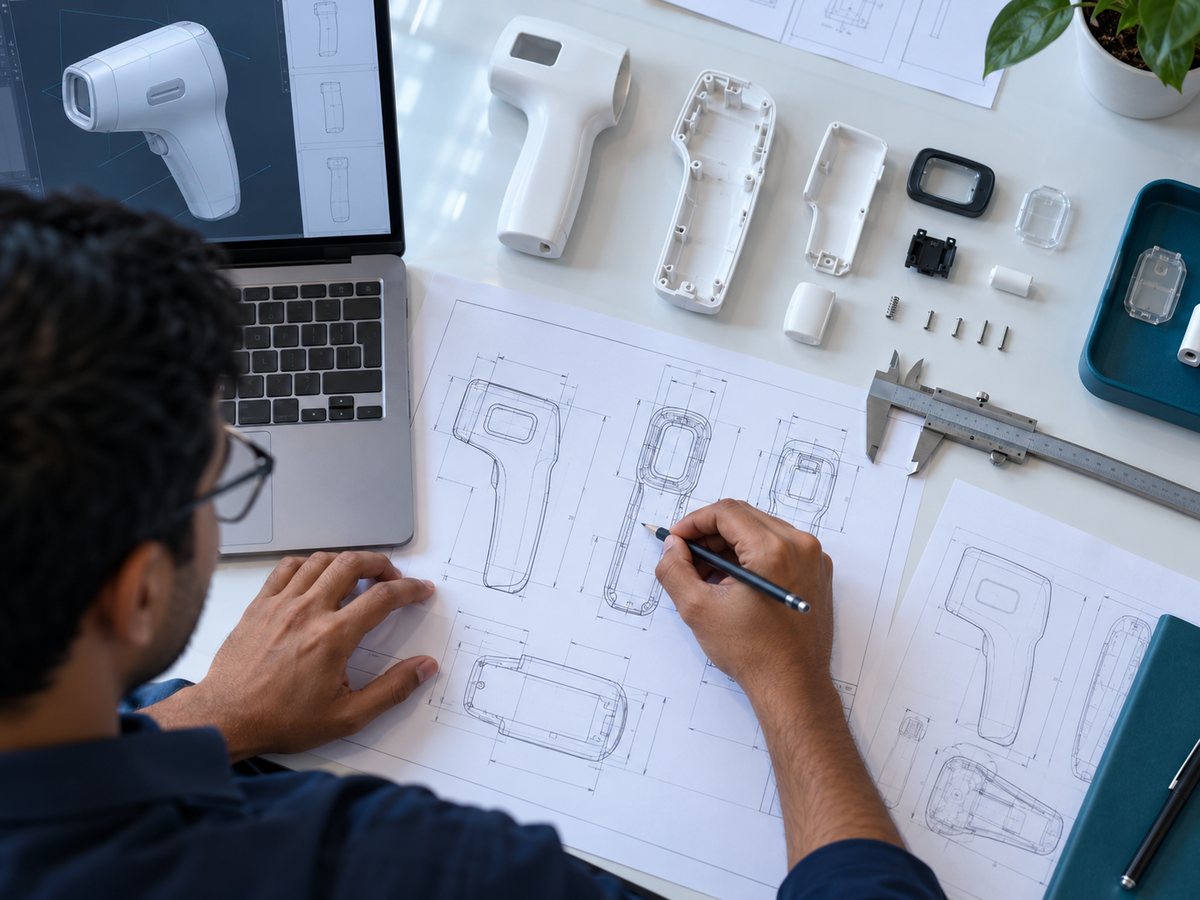
Design Transfer
The point where a design becomes a repeatable build. Drawings and tolerances become work instructions, tooling and inspection checks an operator can follow.
When Design Transfer Is the Right Step
After the design is verified and before the first production build. Design transfer turns the design history file into the records production builds from.

Production Records from the Design File
The drawings, specifications and test methods in the design history file become the device master record that production works from.

Tooling and Fixtures
Moulds, jigs and fixtures specified and made, so that parts come out the same way every time.
Work Instructions and Pilot Builds
Each assembly and inspection step written down, then tried in a pilot build before production relies on it.
How a Design Transfer Runs
What You Bring and What You Get
You Bring
- The design history file, or what exists of it
- Released drawings, CAD and specifications
- The bill of materials and the suppliers you use today
- The risk file and the verification results
- If a record is missing, the review at the start lists it.
You Get Back
- A device master record that production can build from
- Tooling and fixtures for production
- Work instructions and inspection plans
- A list of the processes that need validation, with the plans
- Pilot build results: the problems found and how they were fixed
- A transfer record that checks each design output as fit for production
Questions Buyers Ask
When should design transfer start?
Plan it during design, not after. Choices about materials, tolerances and joining methods decide how a part can be made. The transfer itself runs once the design is verified and stable.
What is the difference between the DHF and the DMR?
The design history file records how the design was developed and verified. The device master record holds what production needs: specifications, drawings, procedures, labelling and inspection criteria. Our article on design transfer explains more.
Which processes need validation?
Any process whose result cannot be fully checked afterwards, such as sealing or bonding. ISO 13485 asks that these processes are validated before they are used in production.
Have a question about Design transfer?
Opens the contact form with this service named. Nothing is sent until you press send.