
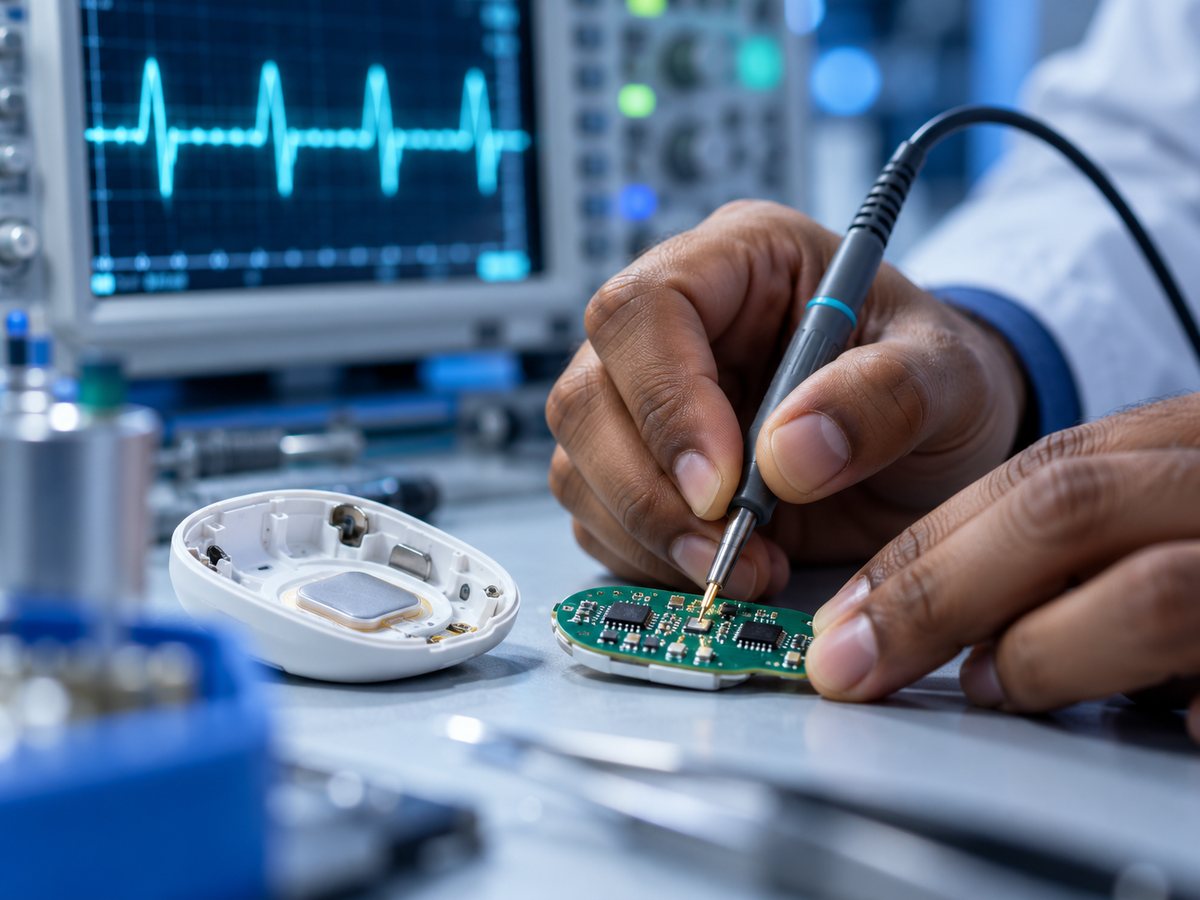
Proof of Principle
The step that decides whether the idea works at all. We take the core mechanism to the bench and test it until the physics either holds or does not.
When a Proof of Principle Is the Right Step
After a concept is chosen and before a full prototype. The one mechanism the whole device depends on is tested on the bench.

Prove the Core Mechanism
The physics or chemistry the device relies on is tested with the simplest rig that answers the question.

De-Risk Before You Raise
Investors and grant bodies ask if the core works. Bench data answers that before capital is committed.

Find the Real Numbers
Measured values replace assumptions, so later requirements can each carry a number that was tested.
How a Proof of Principle Works
What You Bring and What You Get
You Bring
- The chosen concept and why it was chosen
- The mechanism you believe will work, and your evidence
- Target values, even rough ones
- Any earlier test data, papers or lab notes
- The decision the result must support
You Get Back
- A written test question and pass criteria, set before testing
- A bench rig built to answer that question
- Test data, with the method recorded
- A plain reading of what the data shows and does not show
- Measured values to carry into the requirements
- The risks still open, and a recommendation for the next step
Questions Researchers and Founders Ask
Is a proof of principle the same as a prototype?
No. It tests one mechanism, often on a rig that looks nothing like the device. A prototype or MVP brings the parts together into a working whole.
Can the results go into the regulatory file?
They support design inputs and the risk analysis. Design verification is done later, on the design as specified, to a written protocol.
Which risk should the proof address first?
The one that would stop the project if it failed. ISO 14971 risk analysis can start here, and the open risks carry into the next stage.
Have a question about Proof of principle?
Opens the contact form with this service named. Nothing is sent until you press send.